


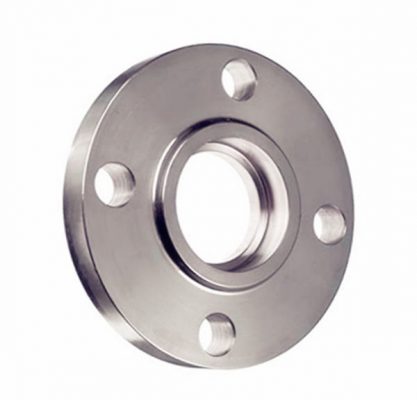
Socket Weld Flange
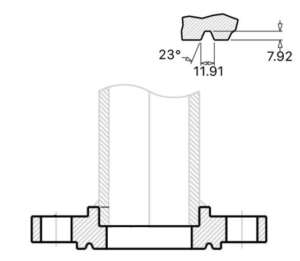
Socket weld flange (SW flange) features a recessed area inside the bore (like a shoulder). This shoulder helps position the pipe at the correct insertion depth. It was originally designed for small-diameter, high-pressure piping systems.
Available Material & Standard
- Carbon Steel: ASTM A105, ASTM A350 LF1/2, ASTM A181
- Alloy Steel: ASTM A182 F5, F9, F11, F22, F91
- Stainless Steel: ASTM A182 F304/L, F316/L
- Outer Diameters: 1/2” to 24” (up to Class 2500)
- Special Sizes: 24” to 60” (up to Class 900)
- Wall Thickness: Schedule 40 to 160
- Pressure Ratings: Class 150 to 2500
- Face Type: RF, RTJ
How to Use
Insert the pipe into the socket until it touches the shoulder, then pull it back by 1.6 mm (1/16”). After that, perform fillet welding. This small gap allows thermal expansion and reduces stress between the pipe and flange.
How Socket Weld Flange is Developed
Socket weld flanges were initially developed for stainless steel superheaters to prevent cracking caused by thermal stress during heating. Over time, they became standard for various materials and applications.
Socket Welded Flange Face Types
Socket weld flanges are available in RF (Raised Face) and RTJ (Ring Type Joint), similar to other flange types such as slip-on, weld neck, and blind flanges.
RF Type
RF socket weld flange has a raised area around the bore where the gasket is placed to ensure proper sealing.

RTJ Type
RTJ type includes a groove on the flange face to accommodate a metal ring gasket, providing superior sealing performance under high pressure.
Advantages
- Can replace threaded flanges to reduce leakage risk.
- No need for beveling before welding.
- Welding is performed outside the pipe, avoiding internal penetration.
- Suitable for applications where internal welding is difficult.
- Eliminates internal pockets and reduces weld distortion and flange face damage.
- Provides better fatigue life compared to slip-on flanges.
Disadvantages
- Requires skilled welding to maintain the correct expansion gap (1/16”).
- Expansion gap may lead to crack formation.
- Not suitable for corrosive or radioactive environments due to potential buildup at the joint.
- May cause corrosion issues between pipe and flange.
- Less preferred than butt welding in critical applications.
Socket Weld Flange vs Slip On Flange
Socket weld flange has a shoulder inside the bore, while slip-on flange does not.
- Slip On Flange: No inner shoulder
- Socket Weld Flange: Has inner shoulder for pipe positioning
- Strength: Similar static strength
- Fatigue Life: 50% higher than double welded slip-on flange